Où acheter
Besoin d'un conseil? Nos revendeurs hautement qualifiés seront heureux de répondre à toutes vos questions.
Trouver un revendeur près de chez vous
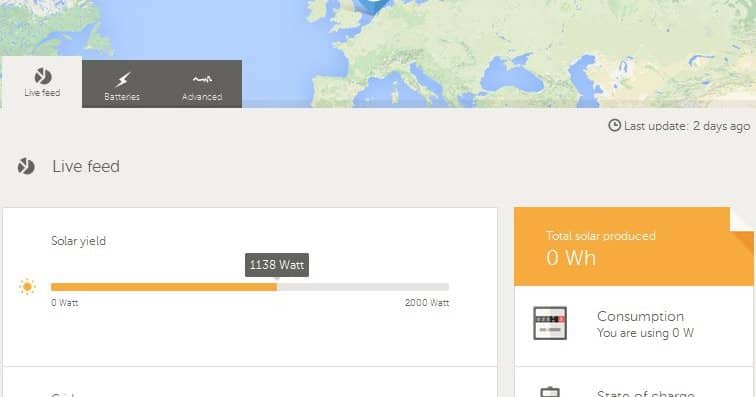
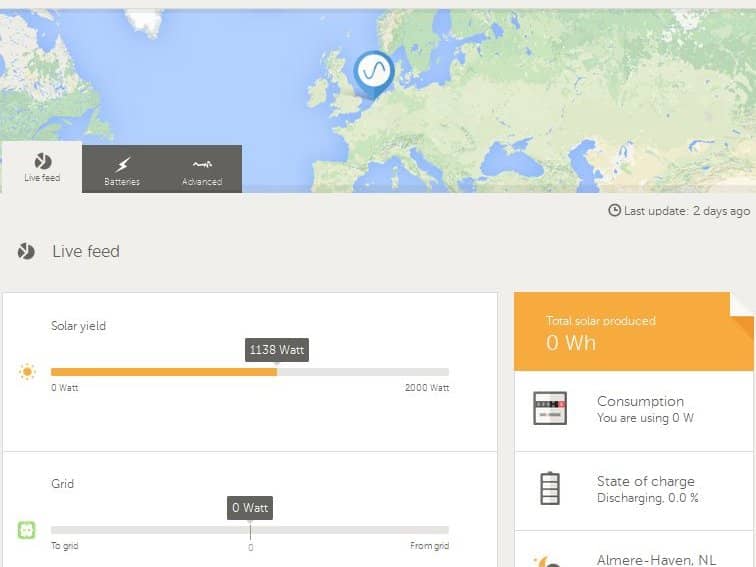
Solar chargers will normally reduce their power when the batteries become full. Otherwise they would overcharge the batteries. Solar power is obviously wasted when reducing the output power. For off-grid systems one could start a pump, or a heater, or do something else that uses this ‘excess’ power. And in on-grid systems in countries with a feed-in tariff it would pay to keep converting at the Maximum Power Point, and then have the Multi feed that surplus back into the grid. And that is exactly what we call a Hub-1 system: as soon as batteries are becoming full, the solar charger will keep operating at the maximum power point and ‘push’ as much power as possible on to the DC. The Multi, in constant communication with the Solar charger, will take that excess power and feed it back into the grid.
More background information about Hub-1 can be found in my previous blogpost about Hub1, and in my father’s excellent brochure about Self-consumption and Energy Storage.
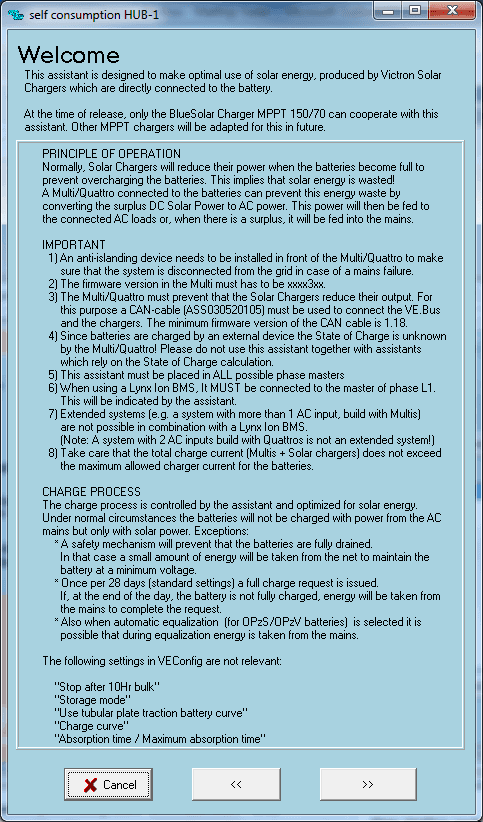
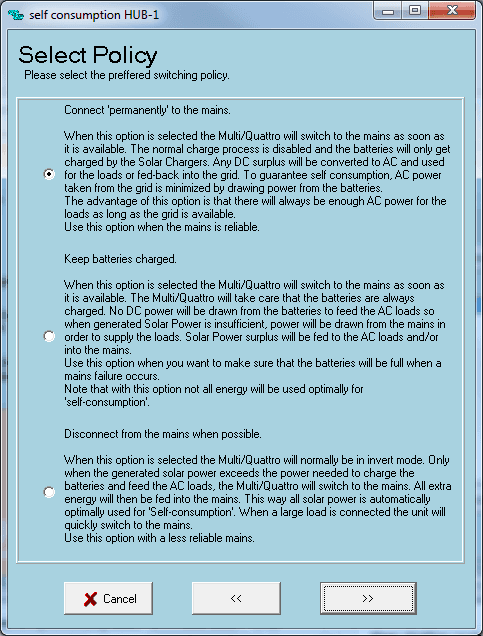
Hub-1 allows several selection policies, as explained on this page of the Assistant:
I am sure there are many more questions, please use the comments. Early next week I’ll add a schematic that shows the system.
Have a good weekend! Matthijs
Besoin d'un conseil? Nos revendeurs hautement qualifiés seront heureux de répondre à toutes vos questions.
Trouver un revendeur près de chez vous
Consultez nos documents de support ou contactez le revendeur original pour une assistance dédiée, une réparation ou une demande de garantie.
Assistance
En savoir plus sur notre garantie standard de 5 ans, leader du secteur, et notre service de réparation mondial.
Garantie


Politique de confidentialité
Préférences de cookies
Utilisation des cookies
Conditions d'utilisation
Mentions légales
©Victron Energy 2026